
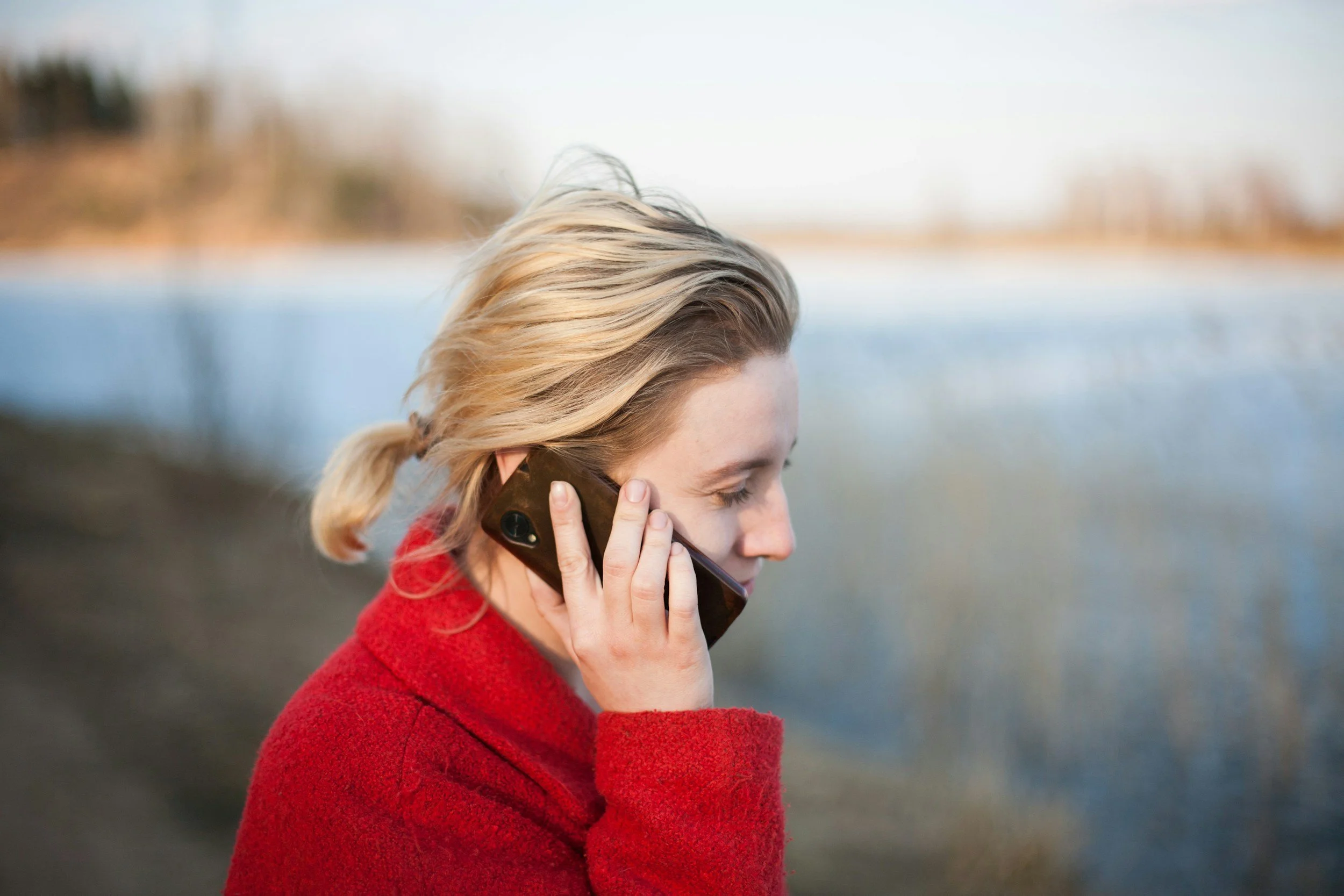
Phone Counselling
Sometimes it feels easier to talk when you don't have to be on camera.
Not everyone wants to spend an hour talking to a counsellor through a screen.
You may feel more comfortable speaking without being seen. You may find it easier to focus on the conversation without worrying about what's happening on camera. Or you may simply prefer talking on the phone.
Sholinder Counselling Collective offers phone counselling as an alternative to video sessions for clients who prefer a more straightforward way of connecting.
The important part is finding a way of counselling that feels comfortable and workable for you.
Frequently Asked Questions About Phone Counselling
-
Phone counselling is much like a regular counselling session, except you'll connect with your counsellor by phone rather than video.
You'll still have space to talk about what's happening, work through concerns, explore patterns, learn skills, and figure out what you want to do next.
Your counsellor will guide the conversation and work with you in much the same way they would during other forms of counselling.
You don't need to be on camera for counselling to be personal or meaningful.
-
There are lots of reasons someone might prefer talking by phone.
You might:
Feel more comfortable without being on camera
Find video calls distracting or tiring
Prefer not to think about how you look during a session
Feel more at ease talking while you're somewhere familiar
Have limited internet or an unreliable video connection
Prefer the simplicity of a phone call
Find it easier to focus on what you're saying when you aren't watching yourself or your counsellor
For some people, removing the visual element makes it easier to be present in the conversation.
You don't need a particular reason to prefer phone counselling.
-
Yes.
A counselling relationship isn't dependent on being able to see each other.
Your counsellor can still listen, ask questions, notice patterns, offer perspectives, introduce therapeutic tools, and work collaboratively with you.
You may find that you actually pay more attention to the conversation when there isn't a screen involved.
Counselling doesn't have to look a certain way to be meaningful.
-
Not much.
You'll need:
A phone with a reliable connection
A private space where you can talk
Enough privacy that you won't be overheard
A quiet enough environment to comfortably follow the conversation
You may also want headphones or earbuds if they make it easier to focus or maintain privacy.
You don't need special equipment or a complicated setup.
-
You can be anywhere that gives you enough privacy and allows you to participate comfortably.
Some people take calls from home. Others may use a private room at work or another quiet location.
If you're outside your home, make sure you're somewhere you can speak freely and won't be interrupted.
Privacy matters just as much over the phone as it does during an in-person session.
-
For some people, moving around while talking can actually make a conversation feel more natural.
If you're walking during a session, make sure you're somewhere safe, private, and appropriate for a counselling conversation.
Your counsellor may also have specific expectations about where you can take a session, particularly around privacy, safety, and knowing where you are physically located during the appointment.
The goal is to make the format work for you without compromising your privacy or safety.
-
Phone counselling can be a good option if you prefer talking without video and can participate from a private, reasonably quiet space.
It may not be the best fit for every situation or every person.
Your counsellor may recommend another format if there are circumstances where being able to see each other or having a different kind of support would be important.
We'll talk with you about what makes sense for your circumstances rather than assuming one format works for everyone.
-
Phone counselling may be an option for some adolescents and teens, depending on their age, circumstances, needs, and ability to participate privately.
Because privacy and safety can be more complicated when working with a young person remotely, we'll talk with the teen and parent or caregiver about practical arrangements and expectations before counselling begins.
The goal is to create a setting where the young person can participate meaningfully while appropriate privacy and safety are maintained.
-
We take privacy and confidentiality seriously regardless of how counselling takes place.
Your counsellor will explain confidentiality and its limits as part of the informed consent process.
It's also important that you participate from a private place where other people cannot overhear your conversation.
You can learn more about how we approach privacy and confidentiality on our Privacy & Confidentiality page.
-
It happens.
If your call is interrupted, your counsellor will have a plan for reconnecting or getting back in touch with you.
We'll explain the practical details before your first appointment so you know what to do if there's a technical problem.
A dropped call doesn't have to mean a dropped conversation.
-
You don't have to decide immediately.
Some people know they prefer phone from the beginning. Others try video and phone and discover that one feels more natural.
You can talk with your counsellor about what you're hoping for and which format might work best.
The best format is the one that allows you to participate comfortably, privately, and meaningfully.